
How Can Non-Disclosure Agreements (NDAs) Protect My Business?

Understanding the Power of NDAs Non-disclosure agreements (NDAs) are powerful tools for protecting your business’s sensitive information. They are legally binding contracts that prevent parties from disclosing confidential information to third parties. NDAs are crucial for businesses because they help maintain the confidentiality of proprietary information, trade secrets, and other sensitive data. Whether you are sharing information with employees, contractors, or potential business partners, an NDA ensures that your valuable information remains protected and confidential. Key Protections Offered by NDAs NDAs provide several key protections for businesses. Firstly, they clearly define what constitutes confidential information, ensuring that all parties understand the boundaries of what can and cannot be shared. This clarity helps prevent accidental disclosures. Secondly, NDAs include provisions that outline the consequences of breaching the agreement, which can serve as a deterrent to potential violations. By safeguarding trade secrets, business plans, and proprietary data, NDAs help protect your competitive edge and maintain your business’s integrity. How Long Do NDAs Last and Their Duration The duration of an NDA can vary depending on the nature of the information being protected and the agreement between the parties. Typically, NDAs last for a specified period, often ranging from one to five years. However, some NDAs may include clauses that extend the confidentiality obligation indefinitely for certain types of information, such as trade secrets. It’s important to tailor the duration of the NDA to match the sensitivity and lifespan of the information being protected, ensuring that your business remains safeguarded for as long as necessary. Potential Loopholes and How to Address Them While NDAs are effective, there are potential loopholes that people might try to exploit. Common tactics to get around an NDA include claiming the information was already public knowledge or was independently developed without using the disclosed information. To address these loopholes, it’s crucial to include specific language in the NDA that defines the scope of confidentiality and outlines exceptions clearly. Regularly reviewing and updating your NDAs with the help of a legal professional can also strengthen their enforceability and prevent breaches. Why Choose Stilwell Law for Your NDAs Choosing the right legal partner to draft and review your NDAs is essential for ensuring their effectiveness. At Stilwell Law, I provide personalized and expert legal services tailored to your business needs. My extensive experience in business law allows me to craft comprehensive NDAs that protect your sensitive information and withstand legal scrutiny. I take the time to understand your specific requirements and offer practical advice to safeguard your business interests. Taking the Next Steps to Protect Your Business Protecting your business with a well-drafted NDA is a crucial step in safeguarding your sensitive information. At Stilwell Law, I make the process simple and stress-free. Contact me today to schedule a consultation and take the first step towards securing your business’s future. Working with Stilwell Law is easy, and I’m committed to providing the support and expertise you need to protect your valuable information. Let’s work together to ensure your business remains secure and confidential.
How Do You Know If Probate Is Required in South Dakota?
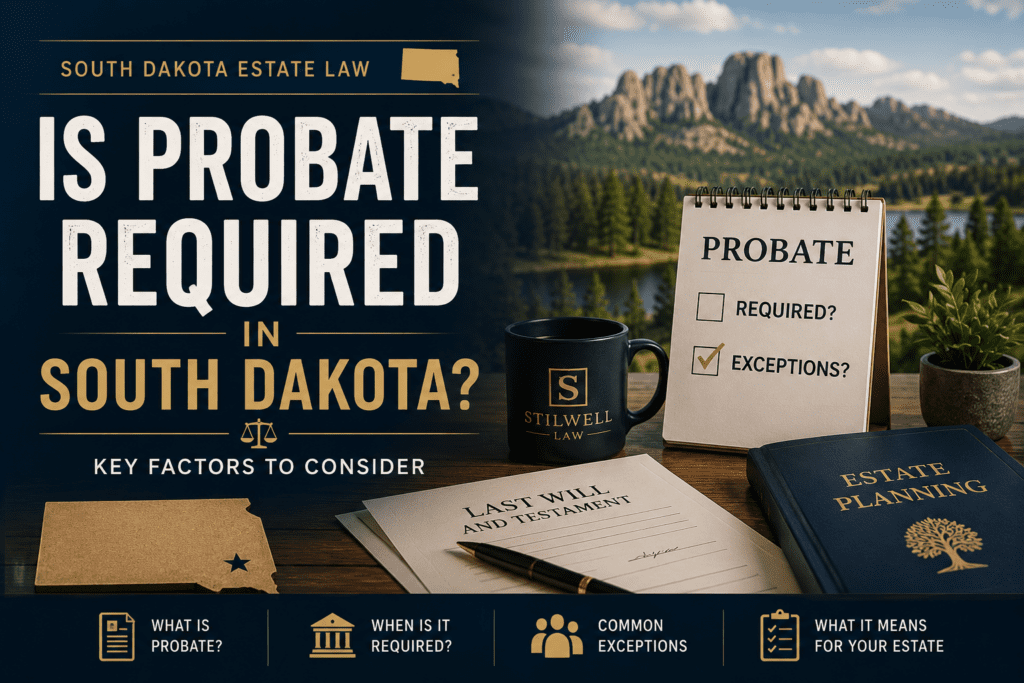
Understanding Probate and Its Purpose Probate is the legal process that occurs after someone passes away, ensuring that their assets are distributed according to their will or state law if there is no will. The primary purpose of probate is to validate the deceased’s will, settle any outstanding debts, and distribute the remaining assets to beneficiaries. Probate helps provide a clear and legally binding resolution to the deceased’s estate, protecting the interests of both creditors and heirs. When Is Probate Required? Probate is typically required when a person dies owning assets solely in their name without designated beneficiaries. These assets might include real estate, bank accounts, investments, or personal property. If the total value of these assets exceeds a certain threshold, probate will be necessary to transfer ownership legally. Additionally, if there are disputes over the will or the estate, probate may be required to resolve these conflicts and ensure that the deceased’s wishes are honored. When Is Probate Not Necessary? There are several situations where probate can be avoided. If the deceased’s assets were held in a living trust, they can be distributed without going through probate. Similarly, assets with designated beneficiaries, such as life insurance policies and retirement accounts, pass directly to the beneficiaries without probate. Jointly owned property with the right of survivorship also bypasses probate, as ownership transfers directly to the surviving owner. Utilizing these estate planning tools can help simplify the transfer of assets and avoid the probate process. Steps to Determine If Probate Is Needed Determining whether probate is necessary involves a few key steps: Inventory the Assets: List all assets owned by the deceased and identify how they are titled. Identify Beneficiaries: Determine if there are designated beneficiaries for any assets. Evaluate the Estate Value: Assess the total value of the probate assets to see if it exceeds the state threshold. Consult an Attorney: Seek advice from a probate attorney to understand the specific requirements and process in your state. By following these steps, you can gain clarity on whether probate is required for the estate and take appropriate action. Benefits of Consulting with a Probate Attorney Navigating the probate process can be complex and time-consuming. Consulting with a probate attorney provides valuable expertise and support, ensuring that all legal requirements are met and the estate is managed efficiently. At Stilwell Law, I offer comprehensive probate services tailored to your unique needs. My personalized approach ensures that you receive the guidance and support necessary to navigate the probate process smoothly and effectively. Taking the Next Steps in the Probate Process Understanding whether probate is required is a crucial step in managing an estate. By working with Stilwell Law, you can ensure that all aspects of the probate process are handled professionally and efficiently. Contact me today to schedule a consultation and take the first step towards a smooth and successful estate administration. With my expertise and personalized approach, you can navigate the probate process with confidence and peace of mind. FAQ Section When is probate required? Probate is required when a person dies owning assets solely in their name without designated beneficiaries, especially if the total value of these assets exceeds a certain threshold. When is probate not necessary? Probate is not necessary for assets held in a living trust, assets with designated beneficiaries, or jointly owned property with the right of survivorship, as these transfer directly to the beneficiaries. How long does it take for probate to be granted? The time it takes for probate to be granted can vary, but it typically ranges from a few weeks to several months, depending on the complexity of the estate and the efficiency of the probate court. What does an executor do after probate is granted? After probate is granted, the executor manages the estate, which includes notifying relevant parties, taking inventory of assets, paying debts and taxes, and distributing assets to beneficiaries according to the will.
Contract Law Basics for Entrepreneurs and Business Owners

Understanding the Importance of Contracts in Business Contracts are the backbone of any business operation. They are legally binding agreements that outline the terms and conditions of a business arrangement, providing clarity and protection for all parties involved. For entrepreneurs and business owners, having well-drafted contracts is essential to ensure smooth operations and minimize the risk of disputes. A contract clearly defines the rights and obligations of each party, helping to build trust and foster strong business relationships. With contracts, businesses are protected from misunderstandings and legal complications. Key Elements of a Business Contract To be legally binding, a contract must contain several essential elements. These include an offer, acceptance, consideration, mutual assent, and legality. The offer outlines the terms of the agreement, while acceptance signifies the agreement to those terms. Consideration refers to something of value exchanged between the parties. Mutual assent means that all parties understand and agree to the contract terms, and legality ensures that the contract’s subject matter is lawful. Each of these elements is crucial in ensuring that a contract is enforceable and protects the interests of all parties involved. Common Types of Business Contracts There are various types of contracts that businesses commonly use, each serving a specific purpose. Some of the most common types include: Understanding the purpose and typical use cases for each type of contract can help entrepreneurs and business owners ensure they have the necessary agreements in place. Navigating Contract Law in Business Contract law governs how contracts are created, interpreted, and enforced. It is essential for business owners to understand the basics of contract law to ensure that their agreements are legally sound. Key legal concepts include the statute of frauds, which requires certain contracts to be in writing, and the parol evidence rule, which limits the use of external evidence to interpret a written contract. By understanding these concepts, entrepreneurs can better navigate contract law and protect their business interests. Protecting Your Business with Effective Contracts Drafting effective business contracts requires attention to detail and a clear understanding of the legal requirements. Some tips for creating effective contracts include: Ongoing contract management is also important, as it ensures that contracts are up-to-date and enforceable. How Stilwell Law Can Assist with Your Business Contracts At Stilwell Law, I offer comprehensive services to help you with all aspects of your business contracts. From drafting and reviewing agreements to ongoing contract management, I ensure that your contracts protect your interests and comply with legal standards. My personalized approach means that I take the time to understand your business and provide tailored solutions to meet your needs. With my expertise in contract law, you can be confident that your business agreements are in good hands. Taking the Next Steps in Contract Management Effective contract management is crucial for the success of your business. By working with Stilwell Law, you can ensure that your contracts are well-drafted, legally sound, and effectively managed. Contact me today to schedule a consultation and take the first step towards securing your business with strong contracts. With my personalized approach and expertise, getting started with contract management is simple and stress-free. Let’s work together to protect your business and ensure its continued success.