
Should My Partnership Have a Written Agreement in Business Law?
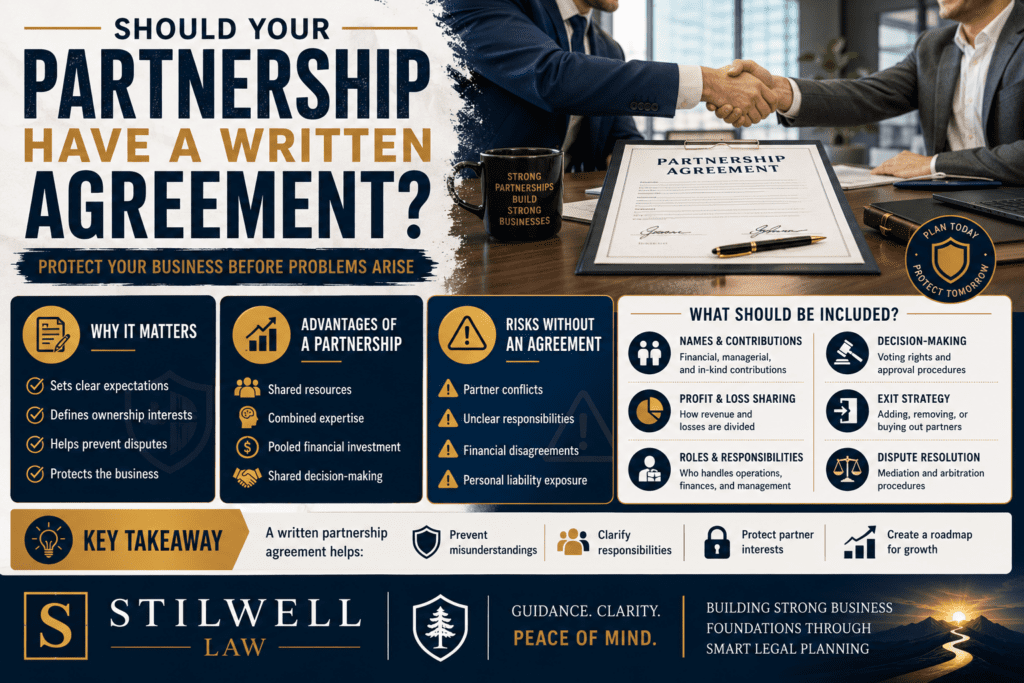
As a business owner, forming a partnership can be an exciting step, but it’s crucial to establish a solid foundation from the start. One of the best ways to do this is by having a written partnership agreement. In this post, I’ll discuss the importance of a partnership agreement, the advantages and disadvantages of partnerships, and what to include in a deed of partnership. The Importance of a Partnership Agreement A partnership agreement is a legally binding document that outlines the terms and conditions of the partnership. This agreement sets clear expectations and responsibilities for each partner, helping to prevent misunderstandings and disputes. Without a written agreement, partners may face significant challenges that could jeopardize the success of the business. Advantages and Disadvantages of Partnerships Advantages of Partnerships Partnerships offer several benefits, including shared resources and expertise, which can lead to increased business growth and innovation. Partners can pool their financial resources, skills, and experience, making it easier to start and expand the business. Additionally, partnerships can provide moral support and shared decision-making, which can help alleviate the pressures of running a business alone. Disadvantages of Partnerships However, partnerships also come with challenges. One of the main disadvantages is the potential for conflicts between partners. Without a clear agreement, disagreements over business decisions, financial matters, and responsibilities can arise. Additionally, partners are jointly and severally liable for the business’s debts and obligations, meaning that each partner can be held personally responsible for the partnership’s liabilities. What to Include in a Deed of Partnership A deed of partnership, also known as a partnership agreement, should include several key elements to ensure that all aspects of the partnership are clearly defined. Here are some essential components to consider: Names and Contributions: Include the names of all partners and their respective contributions, whether financial, managerial, or in-kind. Profit and Loss Sharing: Outline how profits and losses will be distributed among partners. This section should detail the percentage each partner will receive. Roles and Responsibilities: Define the specific roles and responsibilities of each partner. Clarify who will handle different aspects of the business, such as management, operations, and finances. Decision-Making Process: Establish a decision-making process for the partnership. This section should describe how decisions will be made, including voting rights and procedures for resolving disputes. Duration and Termination: Specify the duration of the partnership and the conditions under which it can be terminated. Include procedures for handling the departure or addition of partners. Dispute Resolution: Include a clause outlining the methods for resolving disputes, such as mediation or arbitration, to avoid costly litigation. Why Choose Stilwell Law for Your Partnership Agreement Creating a comprehensive partnership agreement requires careful planning and legal expertise. At Stilwell Law, I provide personalized services to help you draft a partnership agreement that meets your unique needs. My commitment to excellence, client-centered approach, and deep understanding of business law ensure that your partnership is built on a solid foundation. Ready to Protect Your Partnership with a Written Agreement? Don’t leave your partnership’s success to chance. Contact me today to schedule a consultation and take the first step towards securing your business with a well-drafted partnership agreement.
What are Common Probate Disputes and Resolutions in Estate Administration?
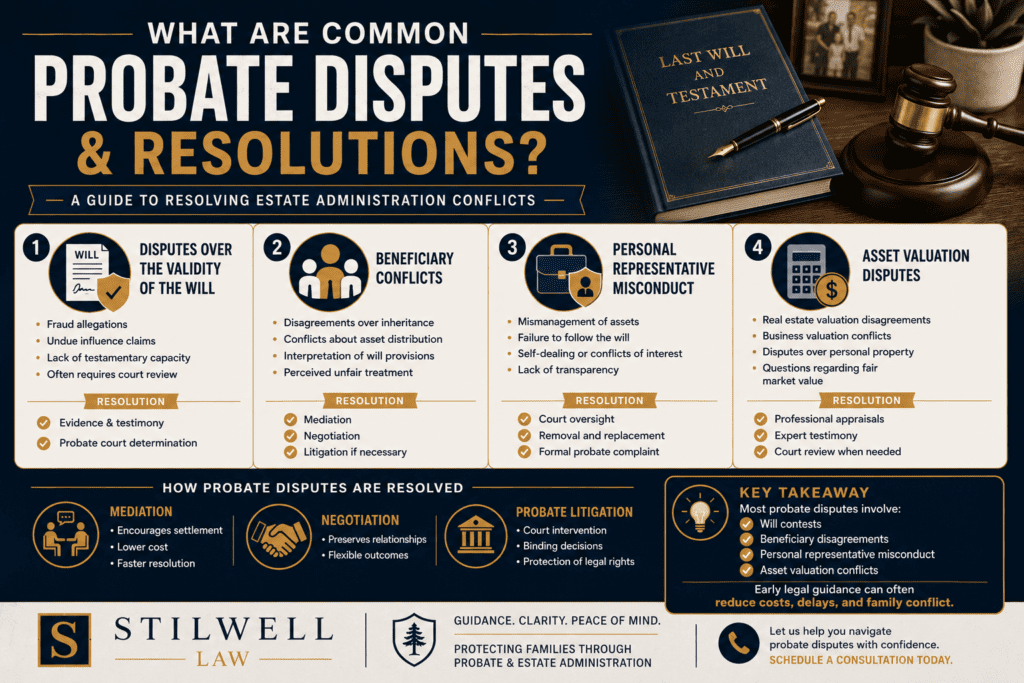
Understanding Probate Disputes Probate disputes arise during the administration of an estate and can significantly impact the process. These disputes may involve challenges to the validity of the will, conflicts among beneficiaries, issues related to personal representative misconduct, or disagreements over asset valuation and distribution. Resolving these disputes effectively is crucial to ensuring a smooth and fair administration of the estate, protecting the interests of all parties involved. Common Types of Probate Disputes Several types of disputes commonly arise during probate: Disputes Over the Validity of the Will: These occur when there are allegations of fraud, undue influence, or lack of testamentary capacity. Conflicts Among Beneficiaries: Disagreements can arise over the interpretation of the will, the distribution of assets, or perceived inequalities among beneficiaries. Personal Representative Misconduct: Issues can arise if the personal representative is accused of mismanaging the estate, failing to follow the will’s instructions, or acting in their own interest. Disputes Over Asset Valuation and Distribution: These involve disagreements over the value of estate assets or the fairness of their distribution. Resolving Disputes Over the Validity of the Will Challenges to the validity of a will can be based on several grounds, including allegations of fraud, undue influence, or lack of testamentary capacity. Resolving these disputes typically involves a court hearing where evidence is presented to support or refute the claims. An experienced probate attorney can help gather the necessary evidence and represent your interests in court, ensuring a fair and just resolution. Addressing Conflicts Among Beneficiaries Beneficiary conflicts often arise from misunderstandings or perceived inequalities in the distribution of assets. Mediation can be an effective way to address these disputes, allowing the parties to discuss their concerns and reach a mutually agreeable solution. In cases where mediation is not successful, the dispute may need to be resolved through litigation. Clear communication and transparency throughout the process can help prevent and resolve beneficiary conflicts. Handling Personal Representative Misconduct Personal representative misconduct can include actions such as mismanaging estate assets, failing to follow the will’s instructions, or acting in their own interest. Beneficiaries can address these issues by filing a complaint with the probate court. The court can remove the personal representative and appoint a new one if necessary. It is important to act quickly if you suspect personal representative misconduct to protect the estate and the interests of the beneficiaries. Resolving Disputes Over Asset Valuation and Distribution Disputes over the valuation and distribution of estate assets can be complex. These disputes often require professional appraisals and expert testimony to determine the fair market value of assets. Once the value is established, the assets can be distributed according to the will or state law. Mediation or court intervention may be necessary to ensure a fair and equitable distribution of assets. Benefits of Working with a Probate Attorney Navigating probate disputes can be challenging and stressful. Working with a probate attorney provides valuable expertise and support, ensuring that all legal requirements are met and that disputes are resolved effectively. At Stilwell Law, I offer comprehensive probate dispute resolution services tailored to your unique needs. My personalized approach ensures that you receive the guidance and support necessary to navigate the probate process smoothly and effectively. Taking the Next Steps in Probate Dispute Resolution Resolving probate disputes is crucial for the fair and efficient administration of an estate. By working with Stilwell Law, you can ensure that all aspects of the probate process are handled professionally and efficiently. Contact me today to schedule a consultation and take the first step towards resolving your probate disputes. With my expertise and personalized approach, you can navigate the probate process with confidence and peace of mind. FAQ Section What are the common grounds for challenging the validity of a will? Common grounds for challenging a will include allegations of fraud, undue influence, lack of testamentary capacity, and improper execution of the will. How can beneficiary conflicts be resolved? Beneficiary conflicts can often be resolved through mediation, which allows the parties to discuss their concerns and reach a mutually agreeable solution. If mediation is not successful, litigation may be necessary. What constitutes personal representative misconduct? Personal representative misconduct can include mismanaging estate assets, failing to follow the will’s instructions, or acting in their own interest. Beneficiaries can file a complaint with the probate court to address these issues. How are disputes over asset valuation and distribution resolved? Disputes over asset valuation and distribution typically require professional appraisals and expert testimony to determine the fair market value of assets. Mediation or court intervention may be necessary to ensure a fair and equitable distribution.
What are the Common Types of Business Disputes That Lead to Litigation?
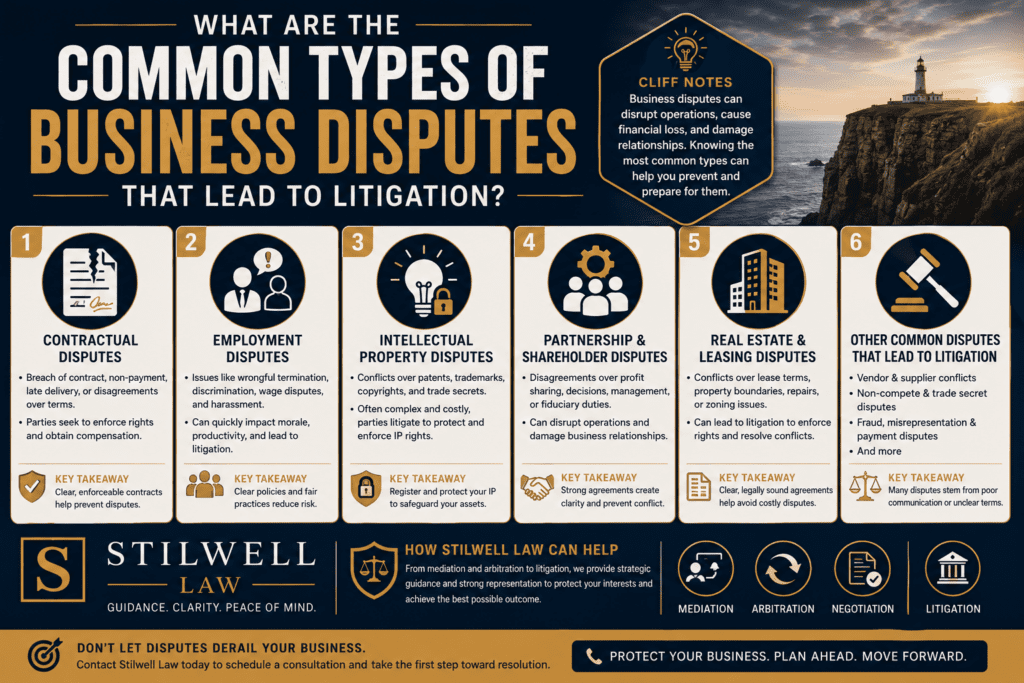
Understanding Business Disputes Business disputes are conflicts that arise between parties involved in commercial activities. These disputes can have significant impacts on businesses, including financial loss, reputational damage, and disruption of operations. Resolving disputes effectively is crucial to maintaining business continuity and protecting your interests. Understanding the common types of business disputes can help you anticipate potential issues and take proactive steps to address them. Contractual Disputes Contractual disputes occur when one party fails to fulfill the terms of a contract, leading to a breach. Common issues include non-payment, failure to deliver goods or services, and disagreements over contract terms. For example, a supplier might fail to deliver products on time, causing financial losses for the buyer. These breaches can lead to litigation as parties seek to enforce their rights and obtain compensation. Ensuring that contracts are clear and enforceable can help prevent such disputes. Employment Disputes Employment disputes arise between employers and employees over issues such as wrongful termination, discrimination, wage disputes, and harassment. These conflicts can escalate quickly, affecting workplace morale and productivity. For instance, an employee might claim wrongful termination, alleging that they were fired without just cause. Employment disputes often lead to litigation, as employees seek legal recourse for perceived injustices. Having clear employment policies and procedures can help mitigate these risks. Intellectual Property Disputes Intellectual property (IP) disputes involve conflicts over the use, ownership, and infringement of IP rights. These disputes can be complex and costly, often involving patents, trademarks, copyrights, and trade secrets. For example, a company might accuse a competitor of using its patented technology without permission. IP disputes can lead to litigation as parties seek to protect their valuable assets and enforce their rights. Protecting your IP through proper registration and legal safeguards is essential to prevent such disputes. Partnership and Shareholder Disputes Partnership and shareholder disputes occur when there are disagreements between business partners or shareholders regarding the management and direction of the company. These conflicts can arise from issues such as profit sharing, decision-making authority, and breaches of fiduciary duty. For example, a shareholder might accuse the company’s management of misusing funds. Such disputes can disrupt business operations and lead to litigation. Having clear partnership and shareholder agreements can help prevent and resolve these conflicts. Real Estate and Leasing Disputes Real estate and leasing disputes involve conflicts related to commercial property, including lease agreements, property boundaries, and zoning issues. For instance, a tenant might dispute the terms of a commercial lease, leading to disagreements with the landlord. These disputes can escalate to litigation as parties seek to enforce their rights and resolve conflicts. Ensuring that real estate agreements are clear and legally sound can help prevent such disputes. How Stilwell Law Can Assist with Business Disputes At Stilwell Law, I offer comprehensive services to help you navigate and resolve business disputes effectively. My expertise in business law and personalized approach ensures that your interests are protected throughout the dispute resolution process. From mediation and arbitration to litigation, I provide the support and guidance you need to achieve favorable outcomes. My goal is to help you resolve conflicts efficiently, minimizing the impact on your business operations. Taking the Next Steps to Resolve Business Disputes Resolving business disputes is crucial for maintaining business continuity and protecting your interests. By working with Stilwell Law, you can navigate disputes with confidence and achieve favorable outcomes. Contact me today to schedule a consultation and take the first step towards resolving your business disputes. With my personalized approach and expertise, getting started with dispute resolution is simple and stress-free. Let’s work together to protect your business and ensure its continued success.
What Are the Essential Contracts Every Business Should Have?
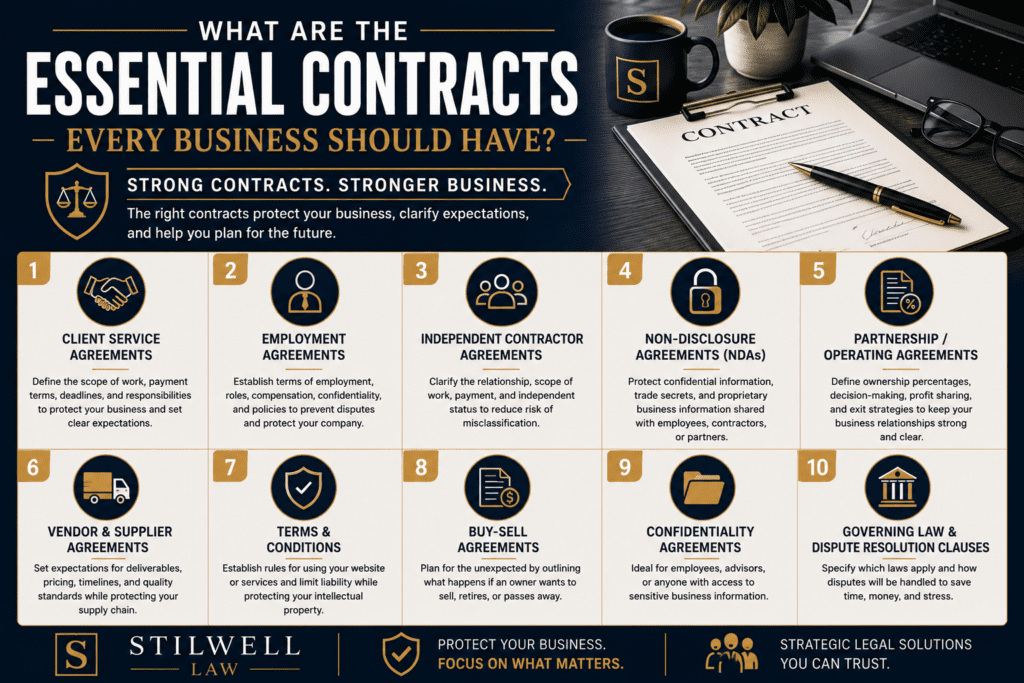
As a business owner, you understand the importance of protecting your interests and ensuring smooth operations. One of the most effective ways to do this is by having the right business contracts in place. Contracts are essential in business because they clearly define the terms of agreements, help prevent disputes, and provide legal protection for all parties involved. In this post, I’ll cover the essential contracts every business should have and explain why they are crucial for your success. The Importance of Business Contracts Contracts are the backbone of business transactions. They serve as legally binding agreements that outline the responsibilities, rights, and expectations of the parties involved. Without contracts, misunderstandings and disputes can arise, potentially leading to costly litigation. Having well-drafted business contracts ensures that all parties are on the same page, which helps build trust and fosters positive business relationships. Essential Contracts for Every Business Operating Agreement If you’re in business with one or more partners, a partnership agreement is vital. This contract outlines the terms of the partnership, including each partner’s contributions, responsibilities, profit-sharing arrangements, and procedures for resolving disputes. A well-drafted partnership agreement helps prevent conflicts and provides a clear roadmap for the business relationship. Employment Agreement An employment agreement is crucial for defining the terms of employment between your business and its employees. This contract should include details such as job responsibilities, compensation, benefits, termination procedures, and confidentiality clauses. Having clear employment agreements helps protect your business and ensures that employees understand their roles and expectations. Non-Disclosure Agreement (NDA) A non-disclosure agreement (NDA) is essential for protecting your business’s confidential information. Whether you’re working with employees, contractors, or potential business partners, an NDA ensures that sensitive information, such as trade secrets and proprietary data, remains confidential. This contract helps safeguard your competitive advantage and prevents unauthorized disclosure of valuable information. Service Agreement If your business provides services to clients, a service agreement is a must. This contract outlines the scope of services, payment terms, deadlines, and responsibilities of both parties. A well-drafted service agreement helps prevent misunderstandings and ensures that both you and your clients have a clear understanding of the expectations and deliverables. Sales Agreement A sales agreement is crucial for businesses that sell products. This contract details the terms of the sale, including pricing, delivery, warranties, and return policies. Having a clear sales agreement helps protect your business from potential disputes and ensures that both parties understand their obligations. Lease Agreement If your business leases property, whether it’s office space, retail space, or equipment, a lease agreement is essential. This contract outlines the terms of the lease, including rent, duration, maintenance responsibilities, and termination procedures. A well-drafted lease agreement helps prevent conflicts and ensures that both parties understand their rights and responsibilities. Why Are Contracts Important in Business? Contracts are important in business for several reasons: Clarity and Precision: Contracts provide clear and precise terms, reducing the risk of misunderstandings and disputes. Legal Protection: Contracts offer legal protection by defining the rights and obligations of all parties involved. Conflict Resolution: Contracts include provisions for resolving disputes, which helps prevent costly litigation. Trust and Professionalism: Well-drafted contracts build trust and demonstrate professionalism, fostering positive business relationships. How to Get Started with Business Agreements Creating effective business agreements requires careful planning and legal expertise. Here are a few steps to get started: Identify Your Needs: Determine which contracts are essential for your business operations. Consult a Professional: Work with an experienced attorney to draft and review your contracts to ensure they meet legal standards and protect your interests. Regular Review: Regularly review and update your contracts to reflect changes in your business and legal requirements. Educate Your Team: Ensure that your employees and business partners understand the importance of contracts and adhere to their terms. Why Choose Stilwell Law for Your Business Contracts Choosing the right attorney to help with your business contracts is crucial. Here’s why Stilwell Law is the best choice for you: Expertise: I have extensive experience in drafting and reviewing business contracts to ensure they meet legal standards and protect your interests. Personalized Service: I take the time to understand your unique business needs and provide tailored solutions. Local Knowledge: With a deep understanding of South Dakota’s business laws, I provide valuable insights and effective representation. Ready to Secure Your Business with Strong Contracts? Don’t leave your business vulnerable. Contact me today to schedule a consultation and take the first step towards securing your business with well-drafted contracts.
What Are the Stages of Probate in South Dakota?
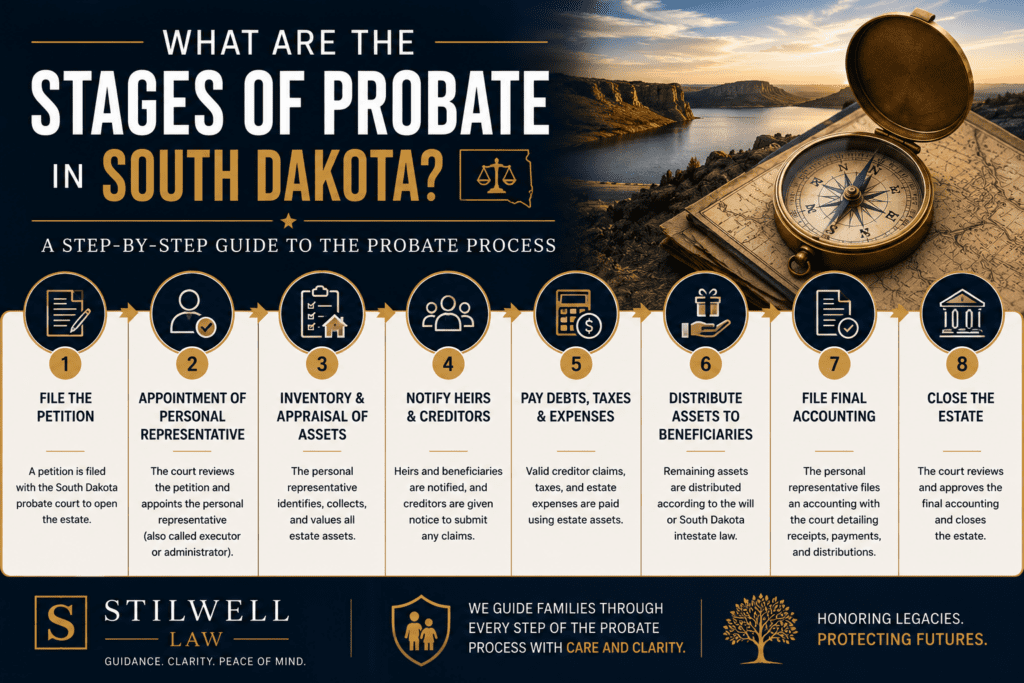
Understanding the Probate Process Probate is the legal process that occurs after someone passes away, ensuring that their assets are distributed according to their will or state law if there is no will. The probate process provides a structured way to manage the deceased’s estate, pay any outstanding debts, and distribute assets to beneficiaries. Understanding the stages of probate can help you navigate this often complex process with confidence. Stage One: Filing the Petition The first stage of probate involves filing a petition with the probate court to obtain letters of personal representation. This petition typically includes the will, if one exists, and a request to appoint a personal representative. The court will then validate the will and officially appoint the personal representative, giving them the legal authority to manage the estate. This stage is crucial for establishing the legal framework for the probate process. Stage Two: Inventory and Appraisal Once the court appoints the personal representative, the next step is to inventory and appraise the deceased’s assets. This involves identifying all assets, including real estate, bank accounts, investments, and personal property. The personal representative must also determine the fair market value of these assets. Accurate inventory and appraisal are essential for ensuring that the estate is managed properly and that assets are distributed fairly to beneficiaries. Stage Three: Paying Debts and Taxes The personal representative is responsible for paying any outstanding debts and taxes owed by the deceased. This includes settling bills, loans, and credit card debts, as well as filing the deceased’s final income tax return and paying any applicable estate taxes. The personal representative must prioritize debts and ensure that all financial obligations are met before distributing assets to beneficiaries. Proper management of debts and taxes is crucial to prevent legal complications and ensure a smooth probate process. Stage Four: Distribution of Assets After debts and taxes are settled, the personal representative can begin distributing the remaining assets to the beneficiaries as specified in the will. This involves transferring ownership of property, disbursing funds from bank accounts, and distributing personal belongings. It is important for the personal representative to follow the will’s instructions meticulously and comply with legal requirements to ensure a fair and accurate distribution. Clear communication with beneficiaries throughout this process helps manage expectations and prevents misunderstandings. Stage Five: Closing the Estate The final stage of probate involves closing the estate. The personal representative must prepare a final accounting, detailing all financial transactions that occurred during the probate process. This final account is then submitted to the circuit court for approval. Once the court approves the final account, the personal representative can distribute any remaining assets and officially close the estate. This marks the completion of the probate process and ensures that all legal and financial matters are resolved. Benefits of Working with a Probate Attorney Navigating the probate process can be complex and time-consuming. Working with a probate attorney provides valuable expertise and support, ensuring that all legal requirements are met and the estate is managed efficiently. At Stilwell Law, I offer comprehensive probate services tailored to your unique needs. My personalized approach ensures that you receive the guidance and support necessary to navigate the probate process smoothly and effectively. Taking the Next Steps in the Probate Process Understanding the stages of probate is a crucial step in managing an estate. By working with Stilwell Law, you can ensure that all aspects of the probate process are handled professionally and efficiently. Contact me today to schedule a consultation and take the first step towards a smooth and successful estate administration. With my expertise and personalized approach, you can navigate the probate process with confidence and peace of mind. FAQ Section What does probate involve? Probate involves validating the deceased’s will, appointing a personal representative, inventorying assets, paying debts and taxes, distributing assets to beneficiaries, and closing the estate. How long does the probate process take? The probate process can take anywhere from a few months to over a year, depending on the complexity of the estate and any disputes that may arise. What is the role of a personal representative during probate? The personal representative manages the estate, including taking inventory of assets, paying debts and taxes, distributing assets to beneficiaries, and closing the estate. Is probate necessary for all estates? Probate is not always necessary, especially if the deceased’s assets were held in a living trust, jointly owned, or had designated beneficiaries. An attorney can help determine if probate is required for a specific estate.
What Documents Are Needed for Estate Planning?
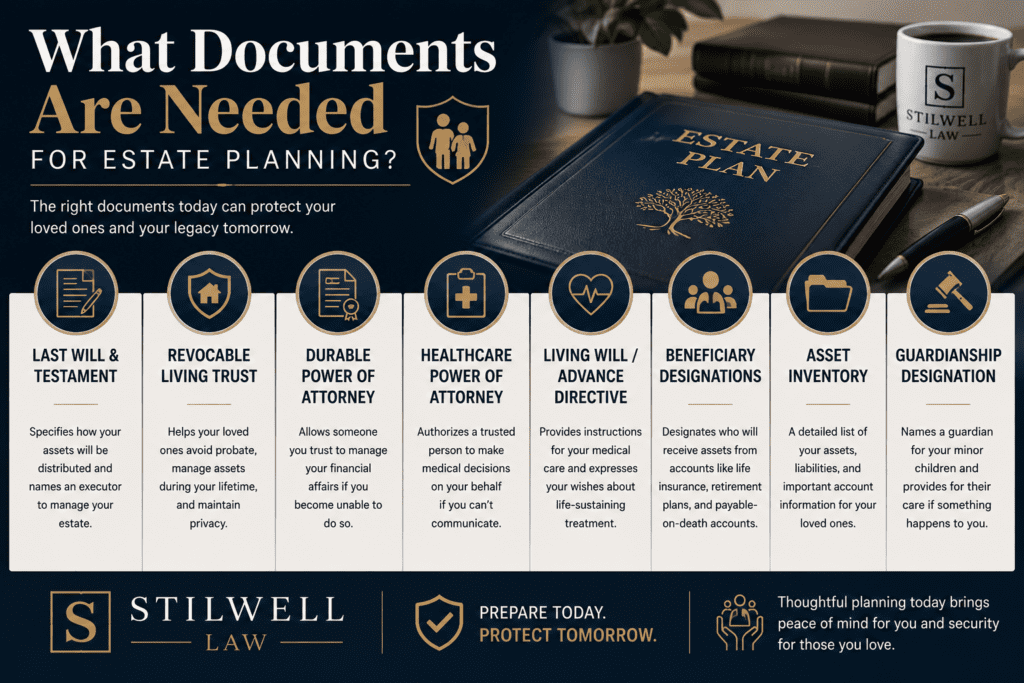
Building a Strong Foundation: Key Estate Planning Documents Creating a comprehensive estate plan is crucial for ensuring that your wishes are honored and your assets are protected. Essential estate planning documents form the foundation of this plan, providing clear instructions on how your estate should be managed and distributed. These documents are not just for the wealthy; everyone can benefit from having a solid estate plan in place. By understanding and preparing these key documents, you can ensure that your legacy is preserved and your loved ones are taken care of. Must-Have Estate Planning Documents Checklist Having a detailed checklist of estate planning documents is essential for creating a comprehensive plan. Here are the basic documents every estate plan should include: Will: Specifies how your assets will be distributed after your death and names guardians for minor children. Trust: Manages and distributes your assets during your lifetime and after your death, potentially avoiding probate. Durable Power of Attorney: Designates someone to manage your financial affairs if you become incapacitated. Healthcare Power of Attorney: Appoints a trusted person to make medical decisions on your behalf if you are unable to do so. Living Will: Provides instructions for your healthcare preferences in end-of-life situations. Beneficiary Designations: Specifies who will receive assets from life insurance policies, retirement accounts, and other financial instruments. Understanding Basic Estate Planning Documents Each of these basic estate planning documents plays a vital role in protecting your estate and ensuring your wishes are honored. A will allows you to specify how your assets will be distributed and who will care for your minor children. A trust can help manage your assets during your lifetime and provide for a smooth transition after your death, potentially avoiding the probate process. A durable power of attorney is crucial for managing your financial affairs if you become incapacitated, while a healthcare power of attorney ensures that someone you trust can make medical decisions on your behalf. A living will provides clear instructions for your healthcare preferences, and beneficiary designations ensure that your assets are distributed according to your wishes. Additional Documents for a Comprehensive Plan In addition to the basic documents, there are other documents that can enhance your estate plan. These include: HIPAA Authorization: Allows your healthcare agent to access your medical records. Letter of Intent: Provides detailed instructions for your personal representative and beneficiaries. Digital Asset Inventory: Lists your online accounts and digital assets with instructions for their management. Revocable Living Trust: Provides greater control over your assets and can help avoid probate. Including these additional documents can provide a more comprehensive plan, ensuring that all aspects of your estate are covered and that your wishes are clearly communicated. Simplifying the Process with Stilwell Law At Stilwell Law, I understand that estate planning can seem overwhelming. That’s why I offer personalized and expert services to help you create a comprehensive estate plan. From drafting wills and trusts to setting up powers of attorney, I provide the guidance and support you need to ensure that your estate is managed according to your wishes. My client-centered approach means that I take the time to understand your unique needs and offer practical solutions to protect your assets and provide for your loved ones. Taking the First Step Towards Comprehensive Estate Planning Estate planning is a crucial step in securing your future and protecting your loved ones. By working with Stilwell Law, you can create a comprehensive plan that reflects your wishes and provides peace of mind. Contact me today to schedule a consultation and take the first step towards securing your legacy. With my personalized approach and expertise, getting started with estate planning is simple and stress-free. Let’s work together to ensure that your estate is managed according to your wishes and that your loved ones are provided for.
What Happens After Probate is Granted?
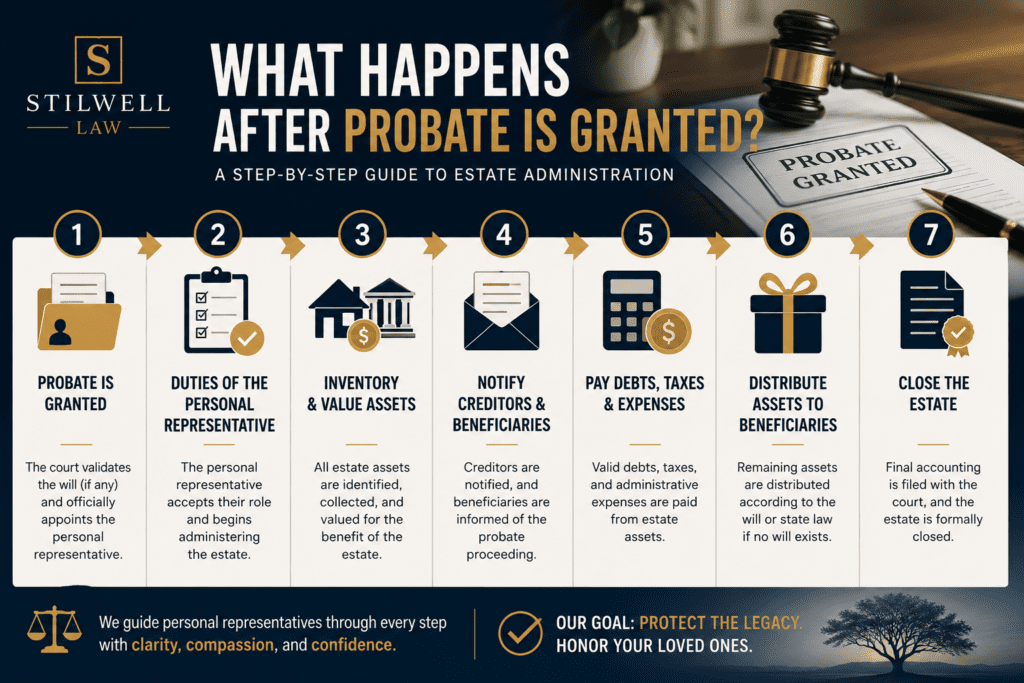
Understanding the Probate Process Probate is the legal process that occurs after someone passes away, during which his or her will is validated, and the deceased’s estate is managed and distributed according to his or her wishes. This process ensures that debts are paid, and assets are correctly distributed to beneficiaries. Understanding the steps leading up to the granting of probate can help demystify what happens next. Types of Probate There are two types of probate, informal probate and formal probate. Informal probate–the most common–is when the personal representative of the decedent’s estate is not supervised by the circuit court judge. Formal probate is when the decisions of the personal representative in managing and fulfilling the will of the deceased are supervised and either approved or denied by the circuit court judge. Formal probate is frequent when there are disputes regarding the beneficiaries and the personal representative are even more common when the decedent has a blended family. Formal probate is akin to a lawsuit where the rules of evidence and the rules of probate must be strictly followed. As such, an attorney is extremely important to ensure your rights are protected and your duties are complied with. Immediate Steps After the Letters of Personal Representative are Issued Once the letters of personal representative are issued by the Clerk of Courts for the appropriate county, the personal representative assumes his or her official role and begins managing the estate. The immediate responsibilities include notifying banks, financial institutions, and other relevant parties. The personal representative must also secure and take inventory of all the deceased’s assets, ensuring they are properly managed and protected during the probate process. This initial phase is crucial for setting the stage for a smooth and orderly estate administration. Distributing Assets to Beneficiaries One of the key roles of the personal representative is to distribute the deceased’s assets to the beneficiaries as outlined in the will. This involves transferring ownership of property, disbursing funds from bank accounts, and distributing personal belongings. It’s essential for the personal representative to follow the will’s instructions meticulously and comply with legal requirements to ensure a fair and accurate distribution. Clear communication with beneficiaries throughout this process helps manage expectations and prevents misunderstandings. Handling Debts and Taxes The personal representative is also responsible for settling the deceased’s debts and taxes. This includes paying off any outstanding bills, loans, and credit card debts. The personal representative must also file the deceased’s final income tax return and pay any applicable estate taxes. Prioritizing debts and ensuring all financial obligations are met before distributing assets to beneficiaries is crucial. Proper handling of debts and taxes prevents legal complications and ensures a smooth administration of the estate. Finalizing the Estate Once all debts are paid and assets are distributed, the personal representative can begin the process of finalizing the estate. This involves preparing a final accounting, which details all financial transactions that occurred during the probate process. The final account is then submitted to the circuit court for approval by a circuit judge. After the court approves the final account, the personal representative can distribute any remaining assets and officially close the estate. This marks the completion of the probate process and ensures that all legal and financial matters are resolved. Benefits of Working with a Probate Attorney Navigating the probate process can be complex and time-consuming. Working with a probate attorney can provide valuable expertise and support, ensuring that all legal requirements are met and the estate is managed efficiently. At Stilwell Law, I offer comprehensive probate services tailored to your unique needs. My personalized approach ensures that you receive the guidance and support necessary to navigate the probate process smoothly and effectively. Taking the Next Steps in the Probate Process Managing an estate after probate is granted is a significant responsibility. By working with Stilwell Law, you can ensure that all aspects of the probate process are handled professionally and efficiently. Contact me today to schedule a consultation and take the first step towards a smooth and successful estate administration. With my expertise and personalized approach, you can navigate the probate process with confidence and peace of mind. FAQ Section How long does it take for probate to be initiated? The Clerk of Courts for the appropriate county will typically issue the letters of personal representative within a few days to a week after filing documents for informal probate. What does a personal representative do after letters of personal representative are issued? After probate is granted, the personal representative manages the estate, which includes notifying relevant parties, taking inventory of assets, paying debts and taxes, and distributing assets to beneficiaries according to the will. Can beneficiaries challenge the personal representative’s actions after probate is granted? Yes, beneficiaries can challenge the personal representative’s actions if they believe there has been mismanagement or breach of fiduciary duty. This usually involves filing a motion to transfer from informal probate to formal probate, which will then invoke the circuit court’s supervision of the management of the estate. Is it necessary to hire a probate attorney after probate is granted? While not legally required, hiring a probate attorney can provide valuable guidance and ensure that all legal requirements are met, helping to avoid potential complications and ensuring a smooth probate process. Additionally, if there are any disputes regarding the management of the estate, an attorney can ensure that you are not left without what you are entitled.
Are There Special Considerations for Blended Families in Estate Planning?

Unique Challenges of Estate Planning for Blended Families Estate planning for blended families presents unique challenges that require careful consideration. Blended families often include children from previous marriages, new spouses, and various familial relationships that can complicate the distribution of assets. Ensuring that all family members are provided for and that your wishes are honored can be complex. These complexities highlight the importance of having a comprehensive estate plan tailored to the unique needs of blended families. By addressing these challenges proactively, you can create a plan that respects your wishes and protects your loved ones. Estate Planning Tips for Blended Families Effective estate planning for blended families requires careful planning and open communication. One of the most important tips is to clearly outline your intentions in your estate plan. This includes specifying how you want your assets distributed among your spouse, children, and stepchildren. Communication with all family members is crucial to ensure that everyone understands your wishes and to prevent potential conflicts. Additionally, consider the use of trusts to provide for your spouse while ensuring that your children from previous marriages also receive their inheritance. Regularly reviewing and updating your estate plan is essential to reflect changes in your family dynamics and financial situation. Creating a Comprehensive Blended Family Estate Plan A comprehensive estate plan for blended families should include several key components. A well-drafted will is essential to specify the distribution of your assets and appoint guardians for minor children. Trusts can be particularly useful for blended families, allowing you to provide for your spouse while protecting the inheritance of your children. Beneficiary designations on retirement accounts, life insurance policies, and other financial instruments should be updated to reflect your current wishes. Additionally, consider creating powers of attorney and healthcare directives to ensure that your financial and medical decisions are handled according to your preferences. Protecting All Family Members’ Interests Ensuring fair and equitable distribution of assets in a blended family requires thoughtful planning. One strategy is to create separate trusts for your spouse and children, ensuring that each party’s interests are protected. Another approach is to use life insurance policies to provide for your spouse, allowing your other assets to be distributed among your children. It’s also important to address the needs of stepchildren, who may not have the same legal rights as biological children without specific provisions in your estate plan. By considering the needs of all family members, you can create a plan that minimizes potential conflicts and ensures that your wishes are honored. Why Choose Stilwell Law for Blended Family Estate Planning At Stilwell Law, I understand the unique challenges that blended families face in estate planning. My personalized approach ensures that your estate plan is tailored to your family’s specific needs and dynamics. With my expertise in estate law, I provide comprehensive services, from drafting wills and trusts to updating beneficiary designations and creating healthcare directives. My goal is to help you create a plan that protects your loved ones and honors your wishes, providing peace of mind for you and your family. Taking the Next Steps Towards a Secure Future Estate planning for blended families is a crucial step in securing your future and protecting your loved ones. By working with Stilwell Law, you can create a comprehensive plan that reflects your unique family dynamics and provides for all your loved ones. Contact me today to schedule a consultation and take the first step towards a secure future. With my personalized approach and expertise, getting started with estate planning is simple and stress-free. Let’s work together to ensure that your estate is managed according to your wishes and that your family is provided for.
Do You Need a Lawyer to Start a Business?
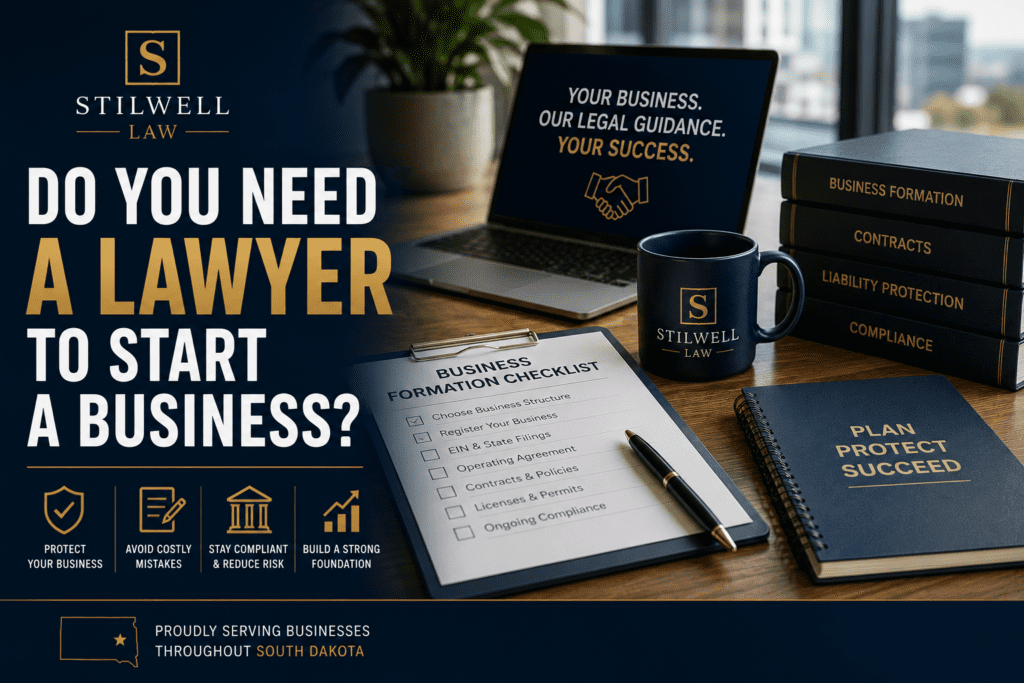
Ensuring Your Business Starts on the Right Foot Starting a business is an exciting journey, but it can also be a daunting one. From the initial idea to the grand opening, there are countless steps involved. One of the first challenges is ensuring that all legal aspects are covered. This is where having a lawyer from the outset becomes invaluable. A lawyer can guide you through the legal requirements, helping to set your business on a solid foundation. With the right legal support, you can focus on building your dream business without worrying about potential legal pitfalls. Understanding the Legal Landscape The legal landscape for starting a business is complex and can be overwhelming for new business owners. There are various regulations and requirements to consider, from registering your business to obtaining the necessary licenses and permits. A lawyer can help you navigate these complexities, ensuring that you meet all legal obligations. They can also advise on the best legal structure for your business, whether it’s a sole proprietorship, partnership, corporation, or LLC. By understanding the legal landscape, you can make informed decisions that will benefit your business in the long run. What Kind of Lawyer Do You Need to Start a Business? Not all lawyers are created equal, and when it comes to starting a business, you need one with specific expertise in business law. A business lawyer can help with various aspects of your startup, including drafting and reviewing contracts, protecting your intellectual property, and ensuring compliance with state and federal regulations. It’s important to choose a lawyer who understands the unique needs of your business and has experience in your industry. This specialized knowledge can be crucial in avoiding common legal pitfalls and ensuring that your business is set up for success. The Benefits of Legal Support for New Business Owners Having a lawyer on your side offers numerous benefits for new business owners. For instance, they can help protect your intellectual property by securing trademarks and patents, which is essential for safeguarding your business ideas and products. They can also draft and review contracts, ensuring that your agreements with partners, suppliers, and customers are legally sound. Furthermore, a lawyer can help you navigate the maze of regulatory compliance, reducing the risk of fines and legal issues down the line. Real-world examples abound of businesses that have faced costly legal battles due to a lack of proper legal support from the beginning. Making the Legal Process Simple and Stress-Free At Stilwell Law, we understand that the legal process can be intimidating for new business owners. That’s why we strive to make it as simple and stress-free as possible. Our personalized approach means that we take the time to understand your unique needs and goals. We guide you through each step of the legal process, from choosing the right business structure to ensuring compliance with all legal requirements. With our support, you can focus on what you do best—building your business—while we handle the legal complexities. Taking the Next Steps with Confidence Starting a business is a big step, but you don’t have to do it alone. With the right legal support, you can navigate the complexities of starting a business with confidence. At Stilwell Law, we are here to help you every step of the way. Contact us today to schedule a consultation and take the first step towards securing your business’s future. Working with Stilwell Law is easy, and we’re committed to providing the support and expertise you need to succeed. Let’s work together to make your business dreams a reality.
How Can Life Insurance Be Integrated into Your Estate Plan?

Maximizing Your Estate Plan with Life Insurance Life insurance plays a crucial role in estate planning by providing financial protection and peace of mind for your loved ones. Integrating life insurance into your estate plan ensures that your beneficiaries receive the support they need after your passing. This approach not only helps manage your estate more effectively but also maximizes the benefits for your heirs. By incorporating life insurance into your estate plan, you can address potential financial gaps and secure a more stable future for your family. Financial Security for Your Loved Ones Life insurance is a powerful tool for providing financial security to your loved ones. The proceeds from a life insurance policy can be used to cover living expenses, education costs, and other financial needs of your beneficiaries. This ensures that your family is well-provided for even after you are gone. By integrating life insurance into your estate plan, you can create a safety net that offers ongoing support and financial stability for your loved ones, helping them maintain their standard of living. Using Life Insurance to Cover Estate Taxes One of the significant advantages of including life insurance in your estate plan is its ability to cover estate taxes. Estate taxes can be substantial and may place a significant financial burden on your heirs. Life insurance proceeds can be used to pay these taxes, ensuring that your beneficiaries do not have to liquidate other assets to cover the costs. This approach helps preserve the value of your estate and provides a smoother transition of assets to your heirs. Leveraging Life Insurance for Charitable Giving Life insurance can also be a valuable tool for charitable giving. By naming a charity as a beneficiary of your life insurance policy, you can make a significant contribution to a cause you care about. This not only benefits the charity but can also provide tax advantages for your estate. Integrating charitable giving into your estate plan through life insurance allows you to leave a lasting legacy and support the organizations that matter most to you. Simplifying the Estate Settlement Process Life insurance can simplify the estate settlement process by providing immediate liquidity. This liquidity can be used to pay off debts, cover final expenses, and manage the costs associated with settling your estate. By having readily available funds, you can reduce the stress and financial burden on your executors and beneficiaries, ensuring a smoother and more efficient settlement process. Life insurance helps streamline the handling of your estate, allowing your loved ones to focus on their emotional healing. Why Choose Stilwell Law for Your Estate Planning Needs At Stilwell Law, I understand the complexities of integrating life insurance into your estate plan. My personalized approach ensures that your estate plan is tailored to your unique needs and goals. With my expertise in estate law, I can help you navigate the options and create a comprehensive plan that maximizes the benefits of life insurance for your beneficiaries. I am committed to providing you with the guidance and support you need to secure your family’s future. Taking the Next Steps to Integrate Life Insurance into Your Estate Plan Integrating life insurance into your estate plan is a crucial step in providing financial security and peace of mind for your loved ones. By working with Stilwell Law, you can create a comprehensive plan that reflects your wishes and provides for your family. Contact me today to schedule a consultation and take the first step towards integrating life insurance into your estate plan. With my personalized approach and expertise, getting started with estate planning is simple and stress-free. Let’s work together to ensure that your estate is managed according to your wishes and that your loved ones are provided for.